


A Beginner’s Guide to UK Sea Angling
A Beginner’s Guide to UK Sea Angling (or: How to Stand in the Cold Holding a Stick and Call It a Hobby)
Sea angling in the UK is a proud national tradition that combines patience, optimism, and the ability to convincingly explain to loved ones why you spent eight hours standing next to the North Sea and returned home with absolutely nothing. It is a pastime beloved by thousands, feared by fish, and completely baffling to anyone who enjoys warmth, comfort, or immediate gratification.
This beginner’s guide will introduce you to the noble art of UK sea angling: what you need, where to go, how to catch fish, and—most importantly—how to tell convincing stories about the ones that got away.
Step 1: Understanding the Concept of Sea Angling
At its most basic level, sea angling involves standing next to a very large body of water, throwing bait into it, and hoping that something alive makes a regrettable decision.
You will notice immediately that the sea is extremely big. This is the first challenge of sea angling. The fish could literally be anywhere in several hundred thousand square miles of water. Your job is to drop bait into precisely the wrong place and then stare at it for hours.
Despite this, anglers remain optimistic. Every cast carries hope. Every twitch of the rod tip might be a fish, a crab, or simply the tide rearranging your line like a bored interior designer.
But hope is a powerful force. And hope, plus a thermos of tea, can sustain an angler through almost anything.
Step 2: Essential Equipment
Before you begin sea angling, you will need equipment. Lots of equipment. More equipment than any rational hobby should require.
The Rod
Your rod is a long, flexible pole designed to launch bait out into the sea and occasionally bend dramatically while everyone nearby shouts advice.
Sea rods typically range between 12 and 14 feet long. This allows you to:
-
Cast further
-
Tangle your line more effectively
-
Accidentally hit people walking behind you
The longer the rod, the more impressive you look while missing fish.
The Reel
The reel holds your fishing line and allows you to retrieve it slowly while wondering if the fish have unionised and agreed not to cooperate.
Beginners will hear heated debates about fixed spool reels versus multipliers.
Experienced anglers will speak about this with the seriousness of medieval theologians debating angels on pinheads.
For beginners, the rule is simple:
If you want fewer bird’s nests of tangled line, start with a fixed spool reel.
If you enjoy emotional hardship and knots the size of Yorkshire, try a multiplier.
Fishing Line
Fishing line connects you to the fish—or more commonly, to seaweed, rocks, or someone else’s rig.
Typical sea lines range from 12–20 lb breaking strain. In theory this means they can hold fish up to that weight.
In reality, it means they can hold:
-
Weed
-
Old shopping bags
-
The occasional suspiciously heavy rock
Terminal Tackle
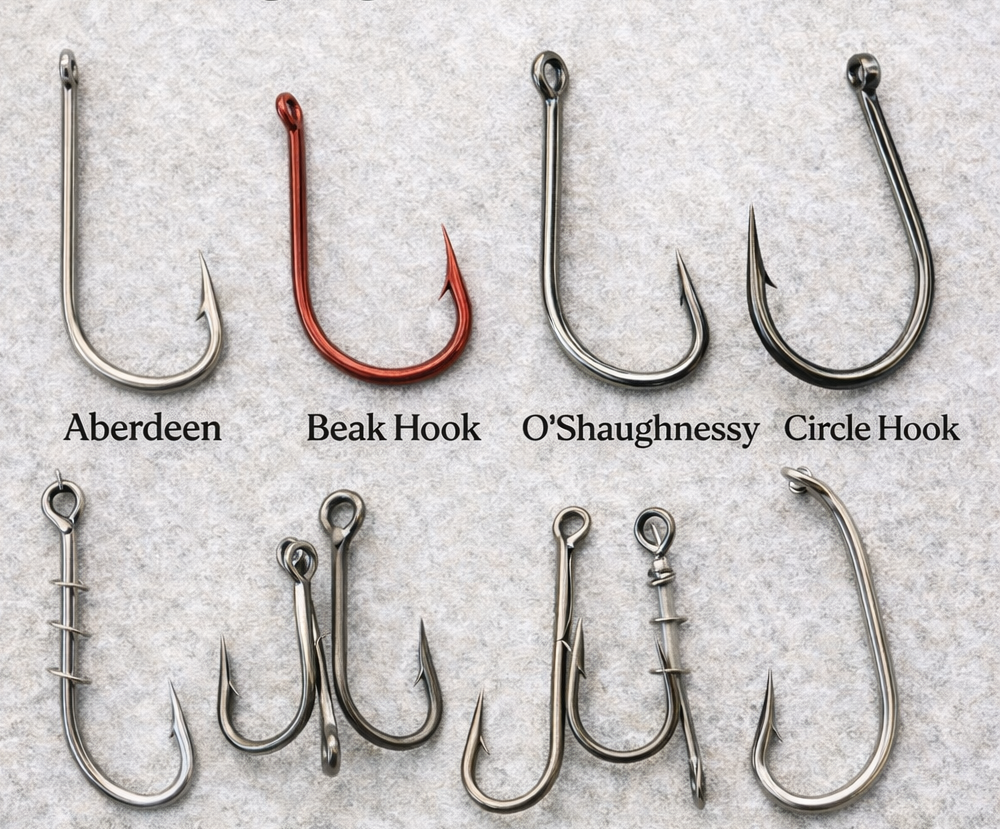
This includes hooks, swivels, weights, and rigs.
Beginners quickly discover that the fishing industry sells approximately nine million different tiny metal objects, each claiming to dramatically increase your catch rate.
In practice, the fish are rarely consulted about these innovations.
Bait
The UK sea angler uses a variety of bait, including:
-
Ragworm
-
Lugworm
-
Squid
-
Mackerel
-
Sand eel
-
Mystery bait found in freezer since 2017
Worms are particularly popular. They are wriggly, slimy, and deeply unpleasant to handle—making them perfect for fishing.
If you are squeamish, you will get over it quickly.
Or you will take up golf.
Step 3: Dressing for the British Coast
Sea angling requires clothing capable of surviving:
-
Wind
-
Rain
-
Cold
-
Horizontal rain
-
Unexpected waves
-
Tea spills
A proper angler dresses in multiple layers until they resemble an inflatable sofa.
Essential items include:
-
Waterproof jacket
-
Waterproof trousers
-
Hat
-
Gloves
-
Boots capable of surviving tidal mud
After several trips you will smell faintly of bait at all times. This is normal.
Your family will notice.
Step 4: Choosing a Location
The UK coastline offers thousands of potential fishing spots, including:
-
Beaches
-
Piers
-
Harbours
-
Rock marks
-
Places recommended by a mysterious man in a tackle shop
Each location has advantages.
Beach Fishing
Beaches are excellent for beginners because:
-
You won’t fall off them
-
There is space to cast
-
You can blame the tide when nothing happens
However, beaches often involve long walks carrying equipment. This will make you question many life choices.
Pier Fishing
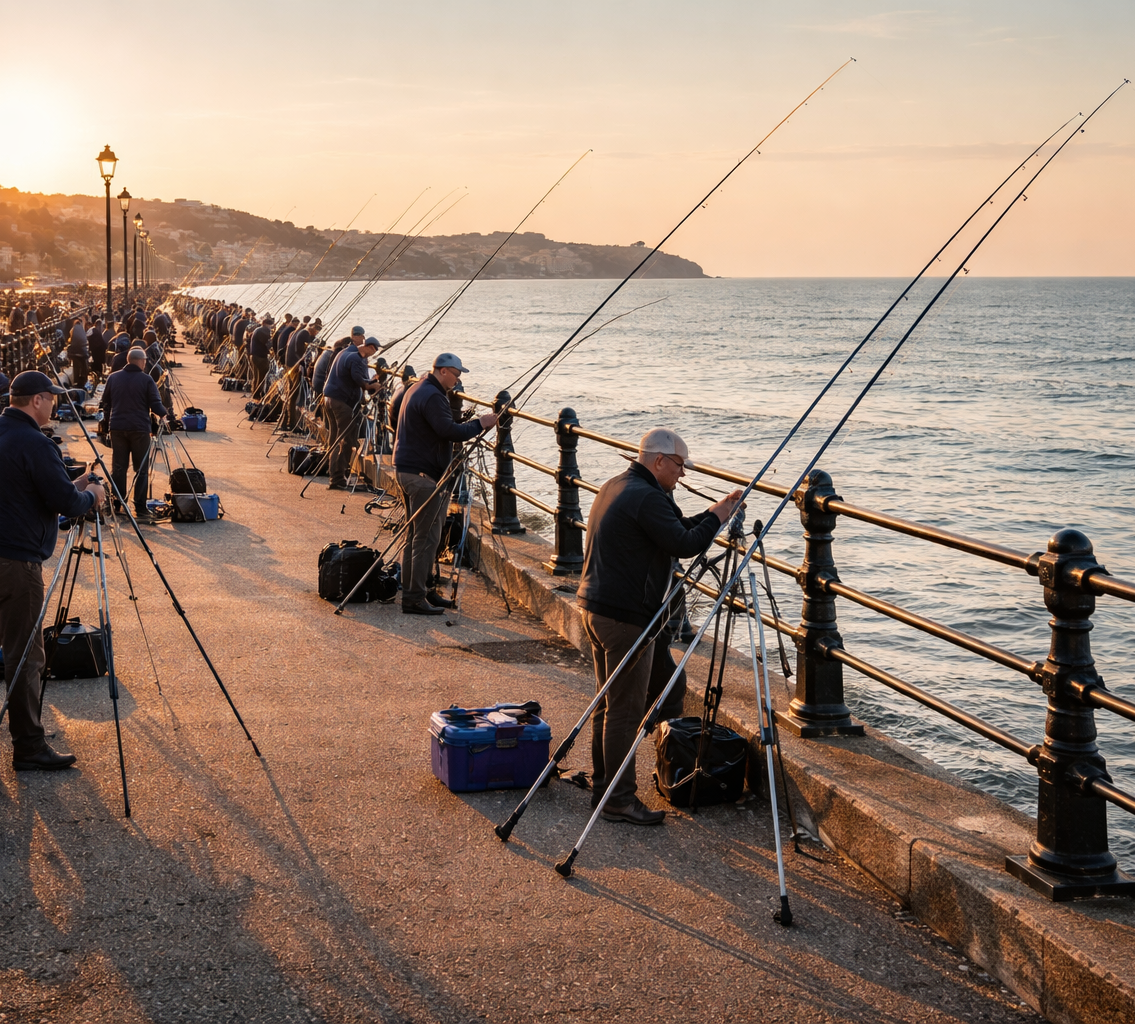
Piers offer convenient access to deeper water and usually have railings to lean on while explaining how big the fish used to be here in the 1980s.
Piers also attract crowds of anglers.
This creates the classic sea angling situation where 25 people stand in a line and everyone pretends they aren’t secretly watching each other.
Rock Fishing
Rock marks are exciting but potentially dangerous.
They offer:
-
Bigger fish
-
Dramatic scenery
-
Slippery surfaces designed by nature to destroy dignity
If fishing rocks, always check the tides. Many anglers have learned this lesson the exciting way.
Step 5: The Art of Casting
Casting is how you deliver your bait into the sea.
There are many styles:
-
The overhead thump
-
The off-the-ground cast
-
The pendulum cast
-
The beginner cast (accidental sideways launch)
Beginners often start with the overhead cast.
This involves swinging the rod behind you and launching the weight forward in a graceful arc.
In theory.
In practice, beginners sometimes cast:
-
Directly into the ground
-
Behind themselves
-
Into someone else’s tackle box
The good news is that everyone nearby once did the same thing.
The bad news is that they will absolutely laugh at you.
Step 6: Waiting
Once your bait is in the water, the most important skill in sea angling begins:
Waiting.
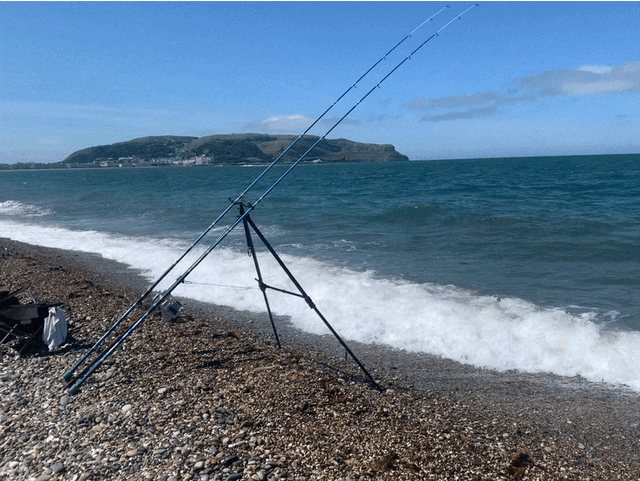
You will place the rod in a holder and stare at the tip for signs of life.
At first, you will interpret every movement as a fish.
Tiny twitch? Fish.
Wave moving line? Fish.
Wind gust? Definitely fish.
Eventually, you will realise the rod tip moves constantly and none of it means anything.
This is the philosophical stage of sea angling.
Step 7: Recognising a Bite
A bite occurs when a fish actually decides to eat your bait.
This event is rare enough to be exciting.
Signs of a bite include:
-
Sharp taps
-
A bending rod tip
-
The sudden appearance of seagulls looking hopeful
When this happens, pick up the rod and reel in.
If the rod bends dramatically, congratulations.
You have caught something.
Or a shopping trolley.
Step 8: The Fish You Might Catch
The UK sea offers many species for anglers.
Here are a few common ones.
Cod
Cod are the holy grail of many winter anglers.
They are powerful, tasty, and capable of generating stories that grow by several pounds each time they are retold.
Catching a big cod will earn instant respect from nearby anglers.
Mostly because they wish it had been them.
Bass
Bass are sporty predators that patrol the shoreline.
They fight hard and look impressive.
They are also famously selective, meaning they will often ignore perfectly good bait just to prove a point.
Whiting
Whiting are smaller fish but extremely common.
They are enthusiastic eaters and excellent for beginners.
They are also responsible for many anglers proudly announcing:
“I caught six fish!”
while quietly omitting that each one was roughly the size of a mobile phone.
Dogfish
Dogfish resemble tiny sharks and appear when nothing else will bite.
They twist your line into impossible knots and glare at you with mild irritation.
Every angler eventually catches dogfish.
Usually several.
Often when they specifically hoped not to.
Step 9: Dealing with Seaweed
Seaweed is the unofficial mascot of UK sea angling.
No matter where you fish, seaweed will appear.
It will attach itself to your line, your hooks, and possibly your clothing.
Retrieving a line full of weed creates the exciting sensation that you might have hooked a giant fish.
Until it surfaces looking like a salad.
Step 10: The Social Side of Sea Angling
Sea angling is surprisingly social.
Anglers often chat between bites, discussing:
-
Tide conditions
-
Bait quality
-
Weather
-
Fish that definitely existed
A typical conversation might include phrases such as:
“Should’ve been here last week.”
or
“Mate caught a 15-pounder right here.”
These statements are always delivered with absolute confidence.
Evidence is rarely provided.
Step 11: The Importance of Tea
No UK fishing trip is complete without tea.
A thermos flask is essential.
Tea provides warmth, morale, and something to do while waiting for fish that may or may not exist.
Some anglers also bring sandwiches, biscuits, and entire camping kitchens.
Fishing trips have been known to resemble seaside picnics with occasional rod checking.
Step 12: Handling Your First Fish
Eventually, the miracle happens.
You reel in a fish.
At this moment, several things occur simultaneously:
-
Your heart rate doubles.
-
Nearby anglers suddenly appear interested.
-
You forget everything you learned about handling fish.
The correct procedure is:
-
Lift the fish carefully
-
Remove the hook gently
-
Either release it or keep it if legal and intended for eating
The incorrect procedure is running around shouting while the fish flaps dramatically.
Beginners often choose the second option.
Step 13: The Legendary “One That Got Away”
Every angler eventually loses a fish.
This is tragic.
But it is also an opportunity.
Because once a fish escapes, it becomes unlimited in size.
Within hours it may grow to double its original weight.
Within weeks it could be described as “the biggest bass ever seen in these waters.”
Over time it becomes a mythological creature.
Possibly with glowing eyes.
Step 14: Accepting the Reality of Sea Angling
The truth about sea angling is simple.
Some days you catch fish.
Many days you do not.
But the experience itself is the reward:
-
Fresh sea air
-
Dramatic coastlines
-
The sound of waves
-
The quiet satisfaction of trying
Plus, when you finally land a good fish, the victory feels enormous.
Mostly because of the previous twelve trips where nothing happened.
Final Advice for Beginners
If you’re starting sea angling in the UK, remember these key tips:
-
Keep your tackle simple
-
Dress warmer than you think necessary
-
Bring tea
-
Accept that seaweed exists
-
Celebrate small catches
-
Laugh at the chaos
And above all, enjoy the process.
Because sea angling isn’t just about catching fish.
It’s about standing beside the ocean, wondering what might be down there, and convincing yourself that next cast—definitely the next one—will be the big one.
It probably won’t.
But that’s not the point. 🎣